
Light Year Distance Calculator
Calculate light year distances. Convert light years to kilometers, miles, and AU. Free astronomy calculator for space distances and cosmic travel measurements.
Cosmic Benchmarks
Select a landmark to set the distance
If you were looking at Earth from this distance right now, you would see events from:
23 hours ago. Radio waves left our furthest man-made object yesterday.
You are currently at a distance that allows observation of these celestial waypoints:
Journey Benchmarks
Understanding the Light Year
A light year is a unit of DISTANCE, not time. It is the distance light travels in a vacuum in one Earth year (~31.5 million seconds).
- Light Speed: ~299,792,458 meters per second
- Distance in 1 Year: ~9,460,730,472,580.8 km
- Equivalent to: ~63,241 Astronomical Units (AU)
Why is it Used?
Interstellar distances are so vast that common units like kilometers or miles become unmanageable. Using light years makes this cosmic scale readable. For example, the nearest star systems are between 4 to 10 light years away.
Cosmic Milestones Registry
| Space Object | Distance | Light Travel Time |
|---|---|---|
| Sun | 1.5 Million kms | 8 light mins, 0.00001582 light years |
| Mercury | 5.8 Million kms | 3 light mins, 0.00000612 light years |
| Venus | 1.08 Million kms | 6 light mins, 0.00001139 light years |
| Mars | 2.28 Million kms | 13 light mins, 0.00002415 light years |
| Jupiter | 7.78 Million kms | 43 light mins, 0.00008233 light years |
| Saturn | 1.43 Billion kms | 1.3 light hours, 0.000150 light years |
| Uranus | 2.87 Billion kms | 2.7 light hours, 0.000302 light years |
| Neptune | 4.5 Billion kms | 4.2 light hours, 0.000474 light years |
| Pluto/ Kuiper belt | 5.9 Billion kms | 5.5 light hours, 0.000628 light years |
| Milky Way (our Galaxy) | 9.5 Trillion kms | 100,000 light years |
| Andromeda Galaxy | 1 Trillion kms | 2,500,000 light years |
| Proxima Centauri | 7.5 Trillion kms | 4.22 light years |
| Alpha Centauri | 4.0208 Trillion kms | 4.367 light years |
| Gn-z11 (oldest galaxy) | 1.34 Hextillion kms | 13,500,000,000 light years |
| Polaris (North Star) | 4.068 Quintillion kms | 400 light years |
| Sirius (brightest star) | 8.146 Trillion kms | 8.6 light years |
Overview & Capabilities
Calculate astronomical distances using light years. Convert between light years, kilometers, miles, and astronomical units (AU). Perfect for astronomy, space science, and understanding cosmic distances.
How to Use
Key Features
Common Use Cases
Tips & Best Practices
Related Tools
Miles to Kilometers Converter
Convert miles to kilometers (mi to km) instantly. Calculate US highway driving distances, speedometer conversions, and Canadian border road trips.

Height Converter Studio
Convert height instantly between feet/inches and cm/meters. Visual stadiometer, pediatric growth charts, and relatable person comparisons for accurate results.
Inches to Feet Converter
Convert inches to feet (in to ft) with fractional and decimal outputs. Calculate construction lumber dimensions, room framing, drywall sheets, and tiling.
Feet to Meters Converter
Convert feet to meters (ft to m) accurately. Ideal for home floor plans, ceiling clearances, architectural blueprints, and real estate listings.

Feet to Miles Converter
Convert feet to miles (ft to mi) instantly using the 5,280:1 ratio. Calculate alpine hiking gain (5,280 ft = 1.0 mi) and commercial aircraft altitudes (35,000 ft = 6.63 mi).

Acceleration Unit Converter — 0-60 MPH Launch Telemetry & G-Forces
Convert acceleration across m/s², Standard Earth Gravity (g-force), ft/s², and Gal. Calculate supercar 0–60 mph launch times, fighter jet Gs, and physics.

Meters to Kilometers Converter
Convert meters to kilometers (m to km) and km to meters instantly. Accurate metric distance converter with formula, presets and interactive conversion tables.
Micrometers to Inches Converter
Convert micrometers to inches (µm to in) instantly using the 25,400:1 ratio. Calculate cleanroom silicon wafer features (25.4 µm = 0.001 in = 1 mil) and HEPA filters.
Millimeters to Micrometers Converter
Convert millimeters to micrometers (mm to µm) instantly using the 1:1,000 multiplier. Calculate microscope slide scales (1 mm = 1,000 µm, 0.07 mm = 70 µm hair).
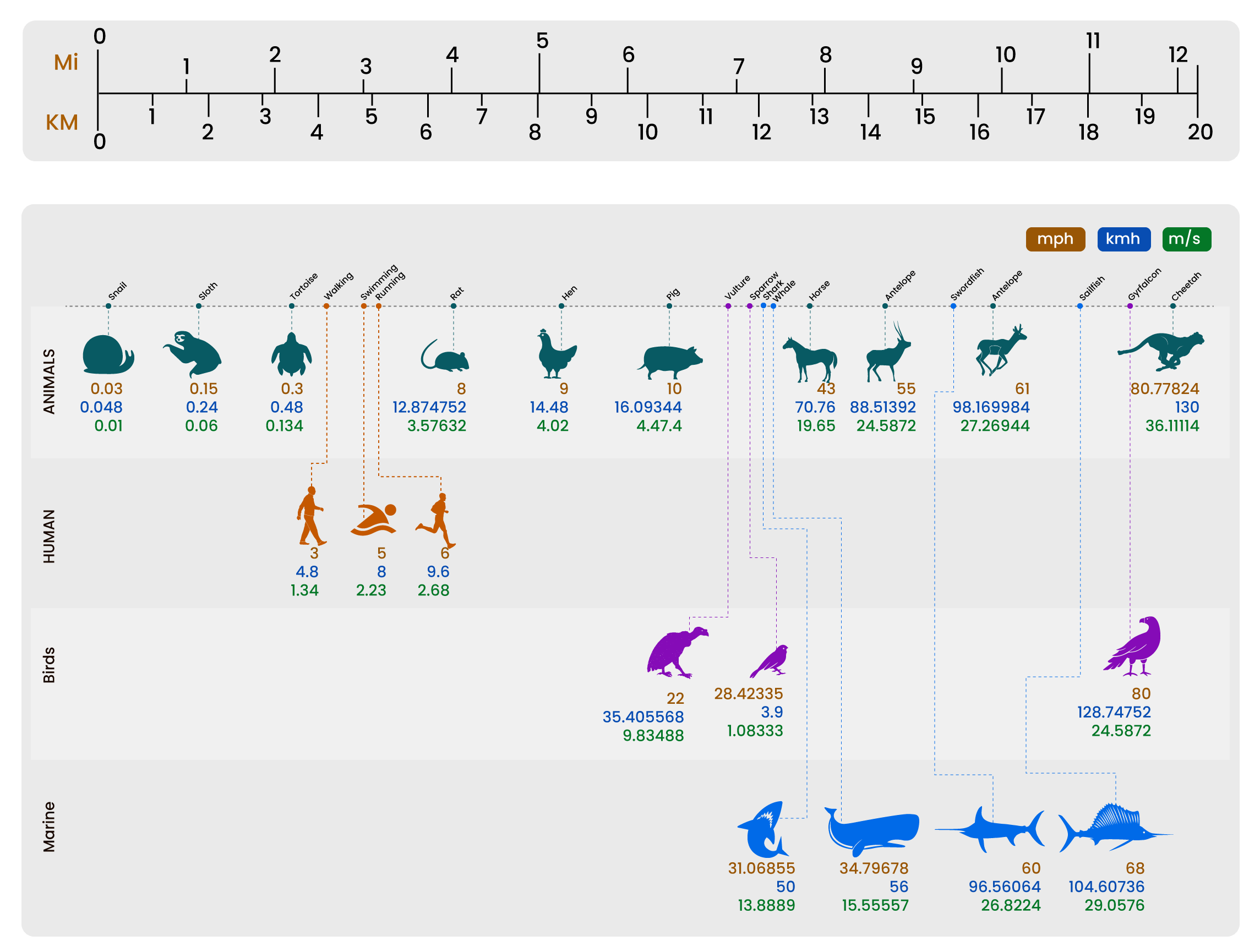
M/S to MPH Converter
Convert meters per second to miles per hour (m/s to mph) instantly. Calculate weather station anemometer wind gusts, gale forces, and hurricane categories.
Kilometers to Miles Converter
Convert kilometers to miles (km to mi) with race pace tables. Calculate 5K, 10K, half-marathon, and full marathon running distances accurately.
Inches to Centimeters Converter
Convert inches to centimeters (in to cm) accurately. Perfect for garment sewing, waist and chest body measurements, shoe sizing, and fabric cutting.
Inches to Millimeters Converter
Convert inches to millimeters (in to mm) instantly using the 1:25.4 multiplier. Calculate camera filter rings (3.0 in = 77 mm) and laptop monitor bezels.
Meters to Feet Converter
Convert meters to feet (m to ft) with decimal and feet-inch breakdown. Calculate human stature, Olympic pool lengths, and international travel distances.
Miles to Feet Converter
Convert statute miles to feet (mi to ft) instantly using the 1:5,280 multiplier. Calculate property easements (0.25 mi = 1,320 ft, 0.5 mi = 2,640 ft) and roadway setbacks.
Feet to Yards Converter
Convert feet to yards (ft to yd) instantly using the 3:1 division. Calculate lawn sod rolls (60 ft = 20 yd, 150 ft = 50 yd) and gravel landscaping paths.
Inches to Yards Converter
Convert inches to yards (in to yd) instantly using the 36:1 division. Calculate wide-format vinyl banners (72 in = 2 yd, 108 in = 3 yd) and ribbon spools.

Meters to Miles Converter
Convert metric meters to statute miles (m to mi) instantly. Convert Olympic track sprints, European road elevations, and topographic survey elevations into miles.
Meters to Centimeters Converter
Convert meters to centimeters (m to cm) instantly using the 1:100 multiplier. Calculate sports track lanes (25 m = 2,500 cm, 50 m = 5,000 cm) and hurdle spacing.