
MPH to Meters per Second Converter — Vehicle Braking & Physics Kinematics
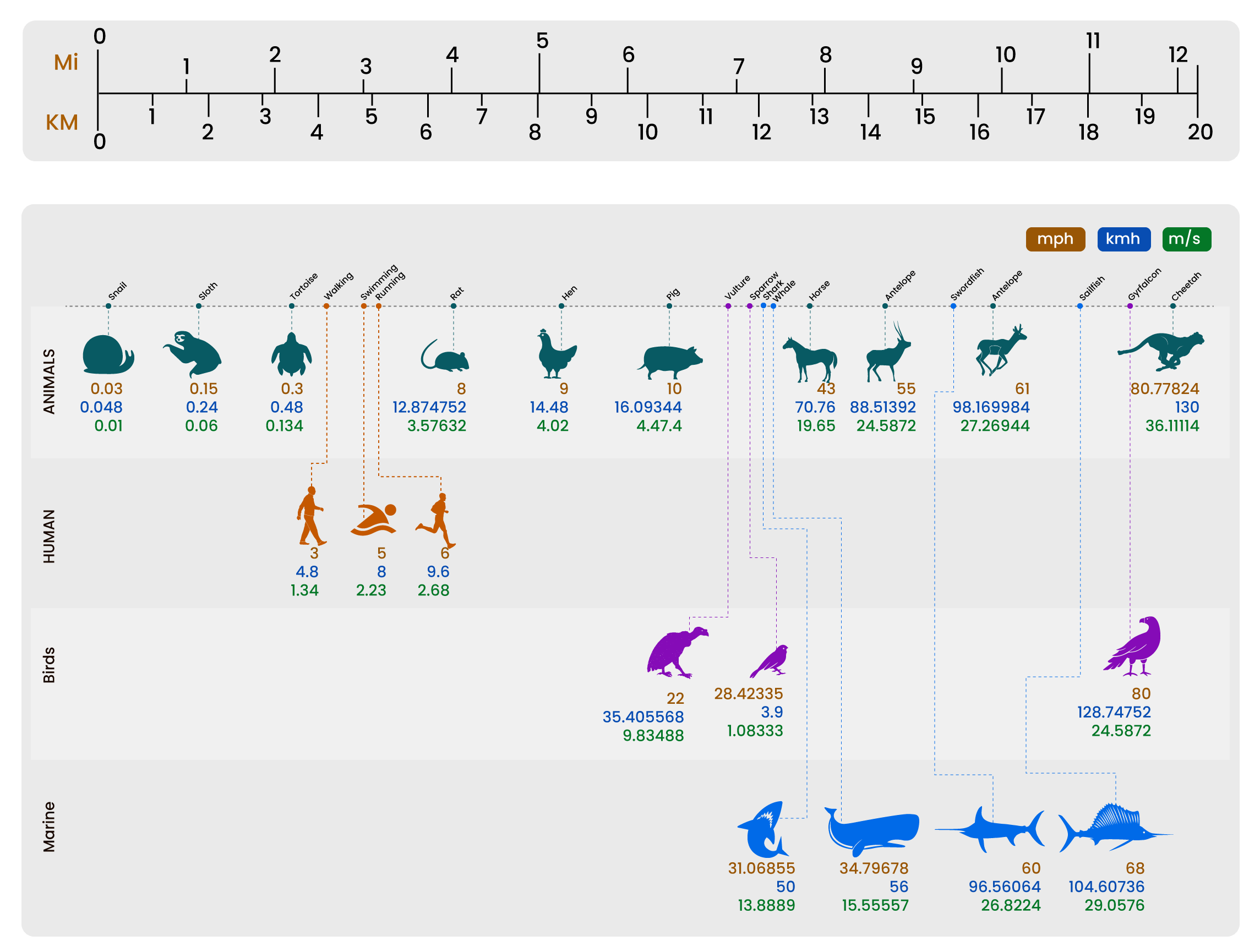
Converting miles per hour (mph) to meters per second (m/s) is essential for physics students, automotive crash investigators, and mechanical engineers solving kinematic equations. In SI physics problems ($v = u + at$ and $s = ut + rac{1}{2}at^2$), velocity must be expressed in meters per second. Additionally, knowing how many meters a car travels each second at highway speeds (60 mph = 26.8 m/s) illustrates stopping distance.
Speed Studio
Conversion Table
| MPH | M/S |
|---|---|
| 1 mph | 0.45 m/s |
| 10 mph | 4.47 m/s |
| 20 mph | 8.94 m/s |
| 50 mph | 22.35 m/s |
| 100 mph | 44.70 m/s |
| 200 mph | 89.41 m/s |
Overview & Capabilities
Converting miles per hour (mph) to meters per second (m/s) is essential for physics students, automotive crash investigators, and mechanical engineers solving kinematic equations. In SI physics problems ($v = u + at$ and $s = ut + rac{1}{2}at^2$), velocity must be expressed in meters per second. Additionally, knowing how many meters a car travels each second at highway speeds (60 mph = 26.8 m/s) illustrates stopping distance.
How to Use
Key Features
Common Use Cases
Tips & Best Practices
Related Tools
M/S to MPH Converter
Convert meters per second to miles per hour (m/s to mph) instantly. Calculate weather station anemometer wind gusts, gale forces, and hurricane categories.
KM/H to MPH Converter
Convert kilometers per hour to miles per hour (km/h to mph) instantly. Calculate European speed camera limits, Autobahn pacing, and train velocities.

Acceleration Unit Converter — 0-60 MPH Launch Telemetry & G-Forces
Convert acceleration across m/s², Standard Earth Gravity (g-force), ft/s², and Gal. Calculate supercar 0–60 mph launch times, fighter jet Gs, and physics.

Power Converter
Universal power converter for Watts (W), Kilowatts (kW), Horsepower (HP), BTU/hr, and Tons of Refrigeration. Calculate HVAC AC cooling loads and electrical capacity.
Frequently Asked Questions
Q What is 60 mph in meters per second?
60 mph equals 26.82 m/s.
Q What is 30 mph in m/s?
30 mph equals 13.41 m/s.
Q What is 70 mph highway speed in m/s?
70 mph equals 31.29 m/s.
Q How far does a car travel in 1 second at 60 mph?
At 60 mph, a car travels 26.82 meters (88 feet) in 1 second.